Buying or selling a waterfront home in Fort Lauderdale can feel exciting right up until the appraisal becomes part of the conversation. That is when many people realize a canal-front or Intracoastal property is not valued quite like an inland home. If you want to understand what appraisers actually look at, what can affect value, and how to prepare for the process, you are in the right place. Let’s dive in.
Why waterfront appraisals are different
A home appraisal is an independent opinion of value used in mortgage lending. It is not the same as a home inspection, and for financed purchases, the lender usually orders it after you go under contract and before closing.
In Fort Lauderdale, waterfront appraisals often require a tighter comparison set than inland properties. That is because value may depend on details like water type, view, dock usability, flood exposure, and marine improvements, not just square footage, bedroom count, or finishes.
Fort Lauderdale’s geography adds another layer. With 165 miles of waterways, two homes that seem similar on paper can offer very different waterfront experiences, and those differences can influence value.
How appraisers choose comparable sales
Most waterfront appraisals still rely on the sales comparison approach. That means the appraiser studies recent closed sales and compares them to the subject property.
Fannie Mae says appraisers should use at least three closed comparable sales and select homes with similar physical and legal characteristics. That includes things like site, size, style, and condition, but on waterfront homes, it also means looking closely at location-related features tied to the water.
In Fort Lauderdale, the best comparable is often not simply the nearest home with a similar layout. It is more often the sale with the most similar water experience.
Water type matters
Not all waterfront is equal in an appraisal. An appraiser may distinguish between open water, canal frontage, Intracoastal frontage, marina-adjacent locations, or partial and obstructed water settings.
That matters because buyers react differently to each type of setting. A wide water view or direct boating access may compete in a different price range than a narrower canal lot, even if the houses are otherwise similar.
View is a real valuation factor
View is a formal appraisal input, not just a listing highlight. Appraisal guidance separates view from general location and site influence, which means the appraiser evaluates it on its own merits.
In practice, that means your home’s value may be affected by whether the view is open, partial, blocked, or especially desirable. Any adjustment still has to be supported by local sales evidence, so there is no automatic formula for what a better view is worth.
Waterfront features that can influence value
A waterfront home’s appeal often comes down to how usable the property is at the water’s edge. Appraisers look beyond the headline of “waterfront” and focus on the features that affect daily use, maintenance, and legal compliance.
Dockage and marine improvements
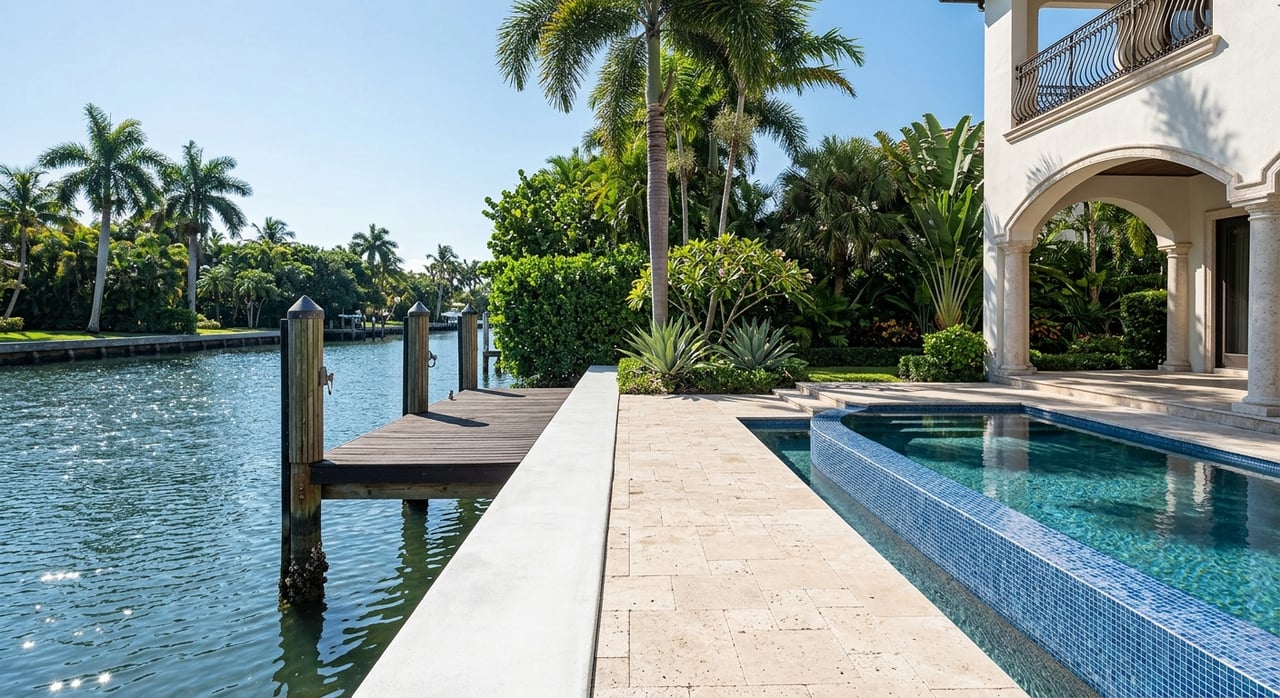
In Fort Lauderdale, marine improvements can be a major part of the valuation picture. City code broadly defines mooring structures to include docks, slips, seawalls, boat davits, hoists, and boat lifts.
That means an appraiser may look at whether these features exist, how functional they are, what condition they are in, and whether they appear to be legally permitted. A dock is not just an amenity. It can affect how the property is used and how it compares to other waterfront sales.
Research outside Fort Lauderdale has shown that dockability can carry a meaningful premium in some markets. That does not create a fixed rule for Broward County, but it does help explain why appraisers pay close attention to usable water access rather than shoreline alone.
Seawall condition and compliance
Seawalls matter because they support the property’s waterfront edge and long-term usability. Fort Lauderdale requires permits for dock and seawall-related work, and the city has also raised the seawall compliance standard to 5 feet NAVD in certain situations under its revised tidal barrier ordinance.
For an appraisal, that can matter in several ways. A seawall may influence marketability, maintenance expectations, and replacement considerations, especially if buyers see it as a near-term expense or a strong point of confidence.
Flood zone and elevation
Flood risk is part of the valuation story for Broward waterfront homes. Broward County points residents to current FEMA flood designations effective July 31, 2024, and Fort Lauderdale’s floodplain rules state that work in the floodplain requires a permit.
Fannie Mae also says FEMA flood zone should be considered when selecting comparable sales. So if your property sits in a different flood designation than nearby homes, that difference may affect the appraiser’s analysis.
Resilience features can matter too. Elevation, flood-zone designation, and visible flood-related improvements may influence how buyers view the home, which can affect supported market value.
What buyers should expect
If you are buying a waterfront home in Fort Lauderdale, the appraisal usually happens after your contract is signed. The lender uses it to help decide whether the property supports the loan amount.
You generally receive a copy of the appraisal and other lender valuations no later than three days before closing. If the value comes in at or above the contract price, the transaction usually moves forward without much disruption.
If the appraisal comes in low, you still have options. Depending on the situation, you and the seller may renegotiate, you may bring more cash to closing, or you may ask the lender for a reconsideration of value if there are factual errors, missing information, or weak comparable sales.
Why low appraisals happen on waterfront homes
A low waterfront appraisal does not always mean the home is overpriced in a broad sense. It can mean the appraiser had limited comparable sales, found differences in water access or view, or could not fully support the contract price with recent closed transactions.
It can also happen when a feature that looks valuable in marketing does not hold up the same way in appraisal analysis. Unpermitted marine improvements, unclear seawall condition, or differences in flood exposure can all affect the result.
What sellers can do before the appraisal
If you are selling, preparation can make the process smoother. You cannot control the final opinion of value, but you can help reduce uncertainty.
For waterfront homes, strong documentation is especially helpful. Clean records for dock, seawall, and floodplain-related work can help the appraiser understand what exists at the property and whether those features were properly handled.
Helpful items to gather
Before the appraisal, it may help to organize:
- Records for dock, seawall, lift, davit, or other marine permits
- Documentation for floodplain-related permits or improvements
- A list of recent upgrades and approximate completion dates
- Any details that clarify water access, dock usability, or seawall work
This does not guarantee a higher valuation. It simply gives the appraiser clearer information about the property’s features and condition.
What happens if you disagree with the appraisal
If you believe the appraisal is inaccurate, you may be able to pursue a reconsideration of value through the lender. This is usually most effective when you can point to specific problems, such as factual errors, omitted features, or poorly matched comparable sales.
On waterfront homes, small mistakes can matter more than usual. An incorrect flood designation, missed permit information, or a comp with a very different water setting can change the analysis.
That is one reason local market knowledge is so important. In a place as varied as Fort Lauderdale, understanding the difference between one canal, one dock setup, or one water view and another can shape the outcome.
Why local context matters in Fort Lauderdale
Waterfront value in Fort Lauderdale is highly specific to the property’s setting. Two homes can share similar square footage and finish quality but appeal to buyers very differently based on the kind of boating access, the width of the water, the condition of the seawall, or the flood-zone profile.
That is why county tax records and public property details can be useful for confirming sale history and parcel information, but they are not a substitute for a lender’s appraisal. The Broward County Property Appraiser’s office notes that its information is for tax-roll purposes and may not be appropriate for other uses.
For buyers and sellers alike, the takeaway is simple: waterfront appraisals are driven by evidence, and in Fort Lauderdale that evidence needs to reflect the real waterfront experience of the property.
If you are preparing to buy or sell a waterfront home, having guidance from someone who understands Broward’s coastal micro-markets can make the process feel a lot less confusing. For thoughtful local insight and high-touch support, connect with Linda DiFabio.
FAQs
How do waterfront home appraisals work in Fort Lauderdale?
- Waterfront appraisals in Fort Lauderdale usually follow the sales comparison approach, but appraisers often use a narrower set of comparable sales because water type, view, dockage, flood zone, and seawall condition can all influence value.
Do waterfront homes always appraise for more in Fort Lauderdale?
- No. There is no automatic waterfront premium. Any value difference has to be supported by local sales evidence, and the result depends on features like view quality, usable water access, condition, and flood exposure.
What matters most in a Fort Lauderdale waterfront comparable sale?
- Appraisers usually focus on the combination of water type, view, dock usability, seawall condition, flood-zone designation, elevation, and how recently similar homes sold.
Can an unpermitted dock or seawall affect a Fort Lauderdale appraisal?
- Yes. Because dock, seawall, and floodplain-related work is regulated in Fort Lauderdale, permit status and condition can affect how confidently an appraiser evaluates those features.
What can buyers do if a Fort Lauderdale waterfront appraisal comes in low?
- Buyers may renegotiate with the seller, bring additional cash to closing, or ask the lender for a reconsideration of value if the appraisal contains factual errors, omissions, or weak comparable sales.