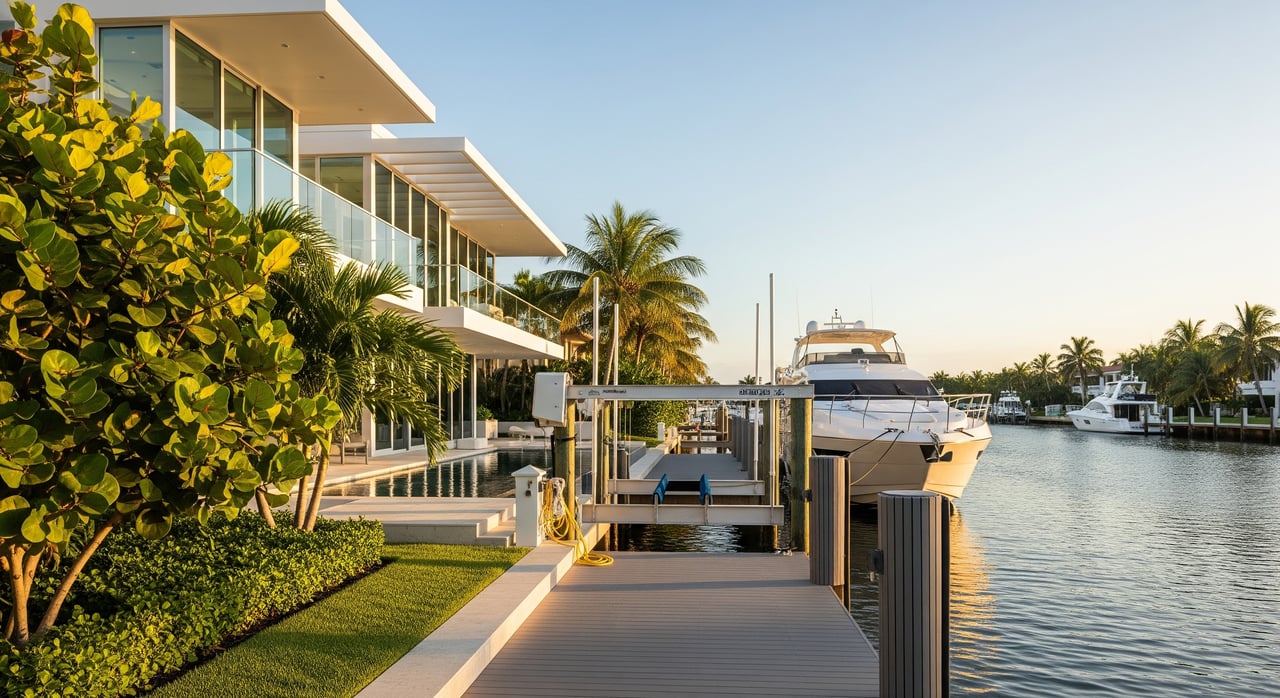
Dreaming of docking at home and cruising straight to the Atlantic without ducking under low bridges? If you boat, the phrase “no fixed bridge” in a listing can make your heart race, but it can also be confusing. You want a property that truly fits your vessel and your lifestyle, without surprises after closing. In this guide, you’ll learn what “no fixed bridge” really means in Fort Lauderdale, how the canals connect to the ocean, how to verify clearances and depths, and what tradeoffs to weigh before you buy. Let’s dive in.
What “no fixed bridge” means
Listings often say “no fixed bridge” to signal that your route from the dock to open water does not require passing under a permanent low bridge. The route may have no bridges at all, or only movable drawbridges that open for vessels. This is helpful, but you should still verify details.
“No fixed bridge” does not guarantee vertical clearance in all tidal conditions, and it does not address underwater depth, narrow channels, or other obstacles like power lines or railroad bridges. MLS fields are agent-entered and can be incomplete, so treat them as a starting point, not a final answer.
How canals reach the ocean
Fort Lauderdale’s canals connect to the Intracoastal Waterway, the New River and Middle River, and then out to the ocean.
- The Intracoastal Waterway is the main sheltered route along the coast through Fort Lauderdale. Many residential canals feed into it.
- The New River and Middle River systems flow into the ICW and toward the inlets.
- Port Everglades Inlet is the primary deepwater inlet for most local boaters. Nearby inlets like Hillsboro to the north are also used depending on your location and route.
Neighborhood patterns to know
Areas such as Las Olas Isles, Rio Vista, Coral Ridge, Harbor Beach, and Sunrise Key generally tie into the New River and ICW. Whether a home is truly “no fixed bridge” depends on the exact canal and bridge configuration on the route from the property to the inlet. Even within the same neighborhood, one canal may be unrestricted while another has a limiting bridge or shallow spot.
Bridge clearance basics
When you evaluate a waterfront home, two measurements matter: what is above the water and what is below it.
- Vertical clearance is the space between the water surface and the lowest part of a bridge. This is critical for your boat’s air draft.
- Tidal datum matters. Clearances on charts are often tied to Mean High Water for worst-case planning. A small tidal range of about 1 to 2 feet in this region can still be the difference between passing and not passing.
- Controlling depth is the shallowest point along your route. A canal can be “no fixed bridge” but still too shallow for your draft at low tide.
Bridge types you may encounter
- Fixed low bridges permanently limit mast height and tall structures.
- Fixed high bridges are less common in small residential canals.
- Movable bascule bridges open per regulations. They usually allow tall vessels when open, but you should confirm operating schedules and any restricted hours.
Verify details before you buy
You have reliable ways to confirm what a listing claims. Use a combination of charts, official notices, and on-site checks.
- NOAA nautical charts and the NOAA online chart viewer show charted bridge clearances and depths on primary waterways.
- The U.S. Coast Guard Local Notice to Mariners reports temporary changes like construction or altered bridge openings.
- Federal bridge regulations in 33 CFR Part 117 outline how drawbridges operate. Some open on signal, while others have scheduled times.
- The Florida Department of Transportation and National Bridge Inventory list technical data for many state-owned bridges.
- City of Fort Lauderdale Waterways Management and Broward County resources can help with local canal maintenance, permits, and maps.
- On-site measurement and a marine survey provide the most accurate picture of vertical clearance at your dock and the condition of seawalls and pilings.
Boats, docks, and tradeoffs
Choosing a “no fixed bridge” canal is about more than getting to the ocean. It should match your boat and how you plan to use it.
- Boat type and size: Tall-masted sailboats and sportfish with outriggers have very different needs than a low-profile center console. Know your air draft and your loaded draft, then add a safety margin.
- Lifts and davits: Lifts must match your boat’s beam and weight. Tall masts are hard to store upright on a lift, and overhead clearance can be a factor.
- Dock length and maneuvering room: Confirm the dock can fit your boat with fenders and safe access. Check channel width and turning basins for larger vessels.
- Insurance and resale: Homes with unrestricted or movable-only access tend to be more attractive to a broader pool of boaters. Canals with low fixed bridges can limit demand.
- Permits and rules: Dock work, lifts, or dredging often require city, county, state, and sometimes federal permits. HOA rules may affect boat size, liveaboards, and dock structures.
- Hurricane planning: Proximity to an inlet can help with pre-storm relocation, while seawall condition and canal exposure affect risk and insurance.
Buyer checklist to use on every listing
Use this quick checklist to confirm the facts and avoid surprises.
- Ask for a plotted route from the dock to the inlet, including every bridge along the way.
- Request a bridge list with published vertical clearances and the tidal datum used. Favor figures at Mean High Water for worst-case planning.
- Confirm drawbridge operations for each movable bridge, including any restricted hours or special procedures.
- Review the latest NOAA chart coverage for your route and check the most recent Coast Guard notices for temporary changes.
- Verify controlling depths along the route and at the dock. Ask for recent soundings, the last dredge date, and who maintains the channel.
- Check worst-case scenarios. Compare your air draft to bridge clearances at Mean High Water and your draft to depths at low water.
- Confirm permitting for dock size, boat size limits, and any lift approvals with the city and HOA.
- Measure your boat’s true air draft, including antennas and hardtop, and keep a safety buffer of at least 12 to 18 inches.
- Obtain a seawall and dock condition report or plan for repairs.
- Speak with your marine insurer about coverage for the location, storm exposure, and any lift requirements.
- Establish a hurricane plan, haul-out options, and nearest facilities that can take your boat size.
- Gather local contacts, including city waterways management, a nearby marina, and a trusted marine surveyor.
Quick scenarios to guide your search
- Sailboat with tall mast: Prioritize routes that are truly “no fixed bridge” or only have movable bridges that open on signal. Verify clearances at Mean High Water and confirm drawbridge hours.
- 35–45 foot sportfish: Consider channel width and turning basins, plus bridge opening schedules if you plan early offshore runs. Check lift feasibility and weight ratings if you prefer dry storage.
- Center console or bay boat: You may pass under more bridges closed, but still confirm closed-position clearances and tidal windows to avoid delays.
Search plan for Fort Lauderdale
- Start with your boat: Document air draft and draft. Decide whether lift storage or in-water mooring fits your routine.
- Map the route: Identify your target neighborhoods, then plot the path to Port Everglades or your preferred inlet.
- Verify in layers: Review charts, bridge operations, and county or city resources, then schedule on-site checks and a marine survey.
- Align lifestyle and logistics: Balance ocean access with neighborhood vibe, commute, and amenities so the property fits daily life, not just weekends.
Ready to see homes that deliver true access and the right lifestyle fit? Reach out to Linda DiFabio for curated waterfront options, route guidance, and a smooth, team-supported purchase from search to closing.
FAQs
What does “no fixed bridge” mean in Fort Lauderdale listings?
- It means your route from a property’s dock to open water does not require going under a permanent low bridge. Movable bridges may be on the route and can open for vessels, but you must still verify clearances, depths, and rules.
How do Fort Lauderdale canals connect to the ocean?
- Most canals lead to the Intracoastal Waterway and the New River or Middle River, then out through Port Everglades Inlet. Some routes use nearby inlets depending on location and conditions.
How can I confirm bridge clearances and depths for a property?
- Use NOAA charts for published clearances and depths, review U.S. Coast Guard Local Notices to Mariners for changes, check bridge operation rules in 33 CFR Part 117, and conduct on-site measurements or a marine survey.
Do tides affect “no fixed bridge” access in Broward County?
- Yes. The tidal range is typically about 1 to 2 feet, which can change whether you clear a bridge closed or have enough depth at a shallow spot. Plan with Mean High Water for worst-case overhead clearance.
Are movable bascule bridges a problem for everyday boating?
- Usually not, but you should confirm opening schedules and any restricted times. Some bridges open on signal, while others use set intervals or have peak-hour limits.
What permits might I need for docks, lifts, or dredging?
- Dock work and lifts often require approvals from the city and county, and sometimes state and federal permits. Check HOA rules, then coordinate with local authorities before you plan improvements.